Self-defense is not about muscle strength. It is about the power of your voice, boundaries, and dignity.
As part of the 16 Days Against Gender-Based Violence campaign, we spoke with our facilitator, trainer, and psychologist Tetyana Vasilyeva.
– Ms. Tetyana, why has the topic of self-defense for women become so important right now, during the war?
– War intensifies everything: fear, tension, fatigue, anxiety. Unfortunately, along with this, the number of cases of gender-based violence is also increasing. Women often find themselves in situations where their boundaries are violated – psychologically, economically, emotionally, or physically. That is why today, more than ever, it is important for women to have the tools to help themselves feel safe in their own bodies, to learn to say “no” and to recognize violence at an early stage. Self-defense is about dignity. It is about a woman’s right to be free, heard, and protected.
What are the principles behind the WenDo method?
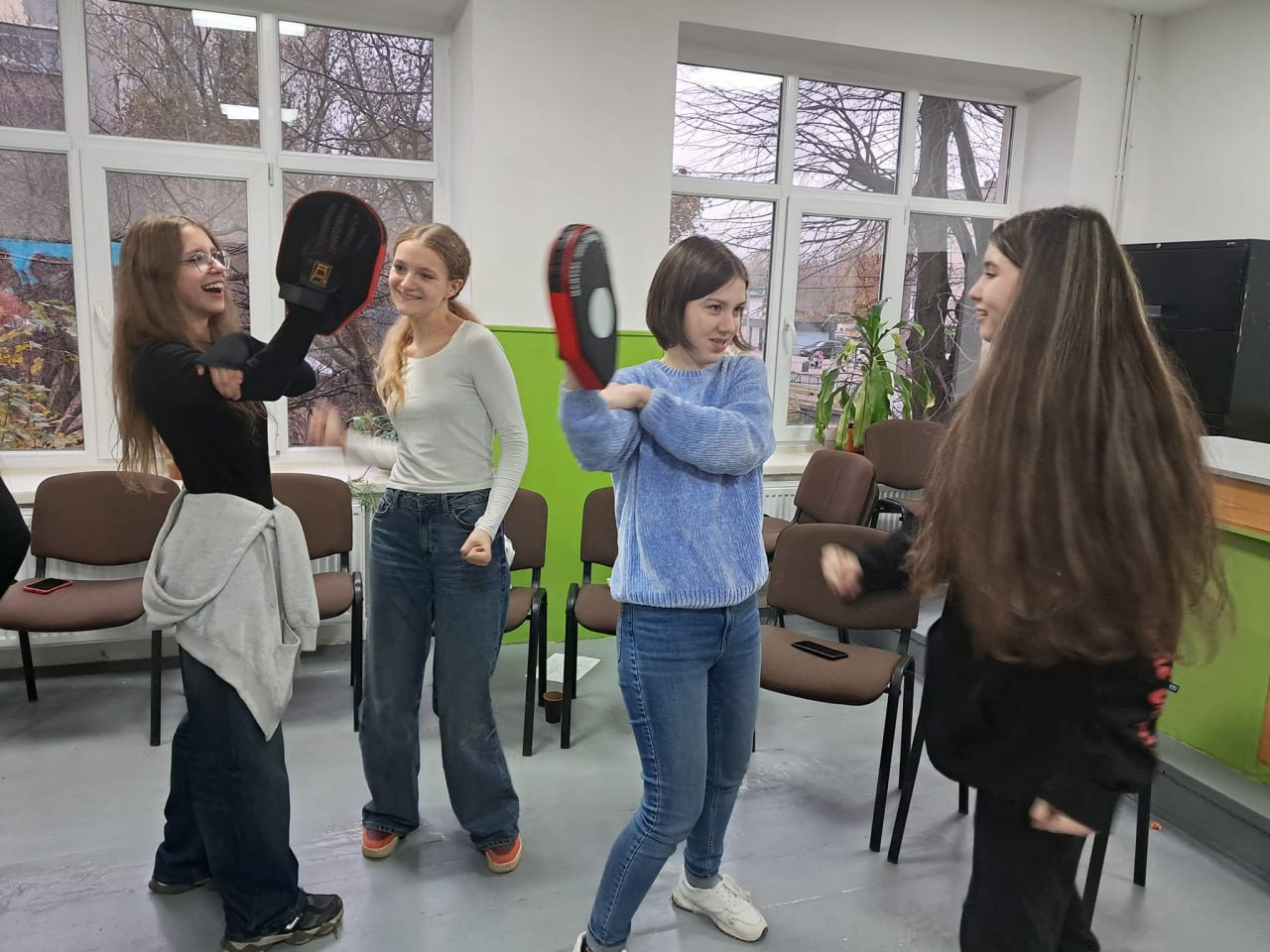
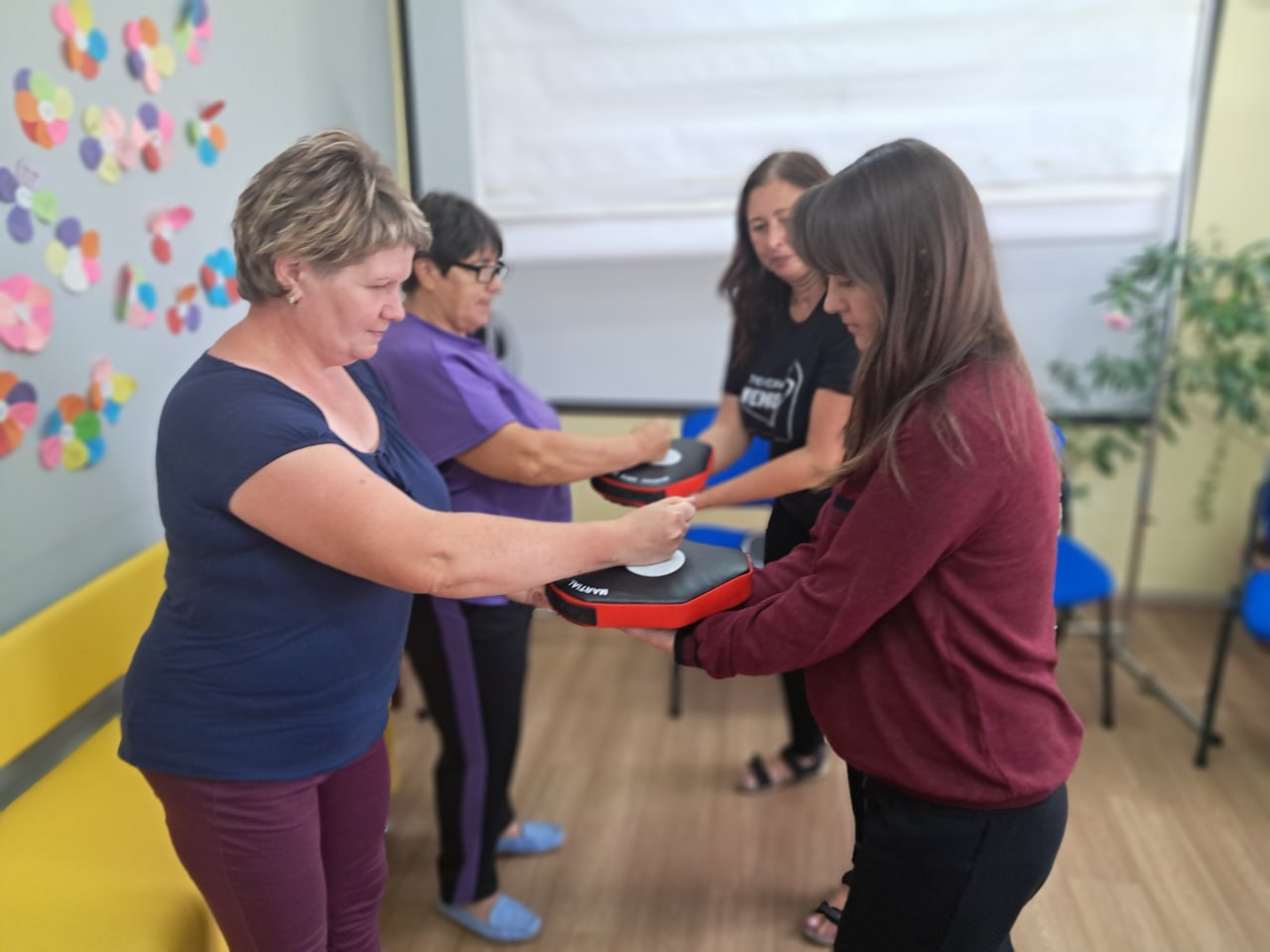
– WenDo was created by women for women in the 1970s in Canada, and it is based on real female experience. It is not about martial arts, and it is definitely not about “fighting better.” It is a combination of psychological and physical defense strategies. We work with the voice, body, inner strength, boundaries, and assertiveness skills. During the training, women learn not only to repel an attack, but also to recognize microaggressions, unwanted advances, unwanted contact, dangerous situations — and to respond in a way that regains control.
– What role does facilitation play during the training?
– As a trainer, I create a safe space. This is important because many women come with their own traumas, fears, and painful experiences. We work gently, respecting each participant’s pace. Women don’t have to be strong — they learn to feel strong. WenDo is accessible to women of all ages and fitness levels, including women with disabilities. My job is to support, provide tools, and help each participant see: “I can do this. I am important. I have the right to safety.”
– What changes do women most often experience after training?
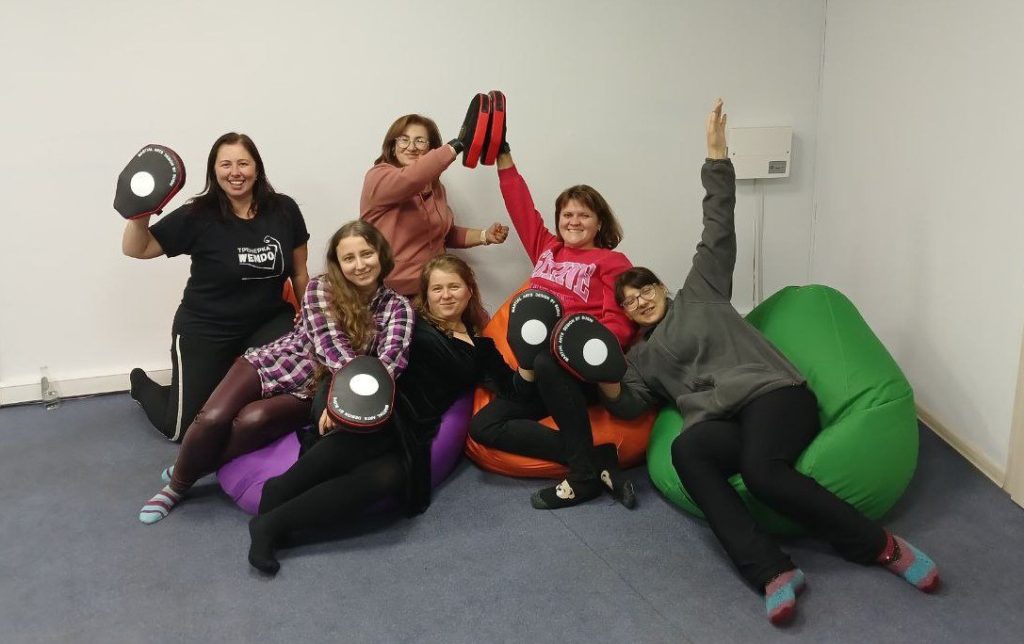
– First of all, confidence. It can be felt literally in the body: women say that they stand differently, speak differently, breathe differently. They learn to trust themselves. Many gain clarity about their personal boundaries and the ability to defend them with words, looks, and tone of voice. Some allow themselves to show anger for the first time. Some say, “This doesn’t suit me.” And just as important, a sense of community emerges. Women’s solidarity is what heals.
– Why is it important to talk about this specifically within the framework of the “16 Days Against Violence” campaign?
– Because this campaign is not about numbers, but about women’s lives. Self-defense is prevention. It is a way to prevent violence before it happens. In times of war, when there are so many external threats, it is important to at least reduce the internal danger. WenDo skills are not about aggression. They are about freedom. About a woman’s right to be heard, protected, and courageous in any circumstances.
The training is conducted by Tetiana Vasylieva, a self-defense and assertiveness trainer for women and girls using the WenDo method, a graduate of the WenDo Training Academy ATW4/UA at the Autonomy Foundation (Krakow, Poland).