Dialogues in communities become especially important in times of uncertainty, when people experience heightened levels of anxiety and have different experiences and needs. In such conditions, traditional discussions often turn into aggressive arguments, with everyone trying to prove “who is right.” Dialogue, on the other hand, allows us to move on to the question of “what can we do together,” reducing tension and creating space for mutual understanding.
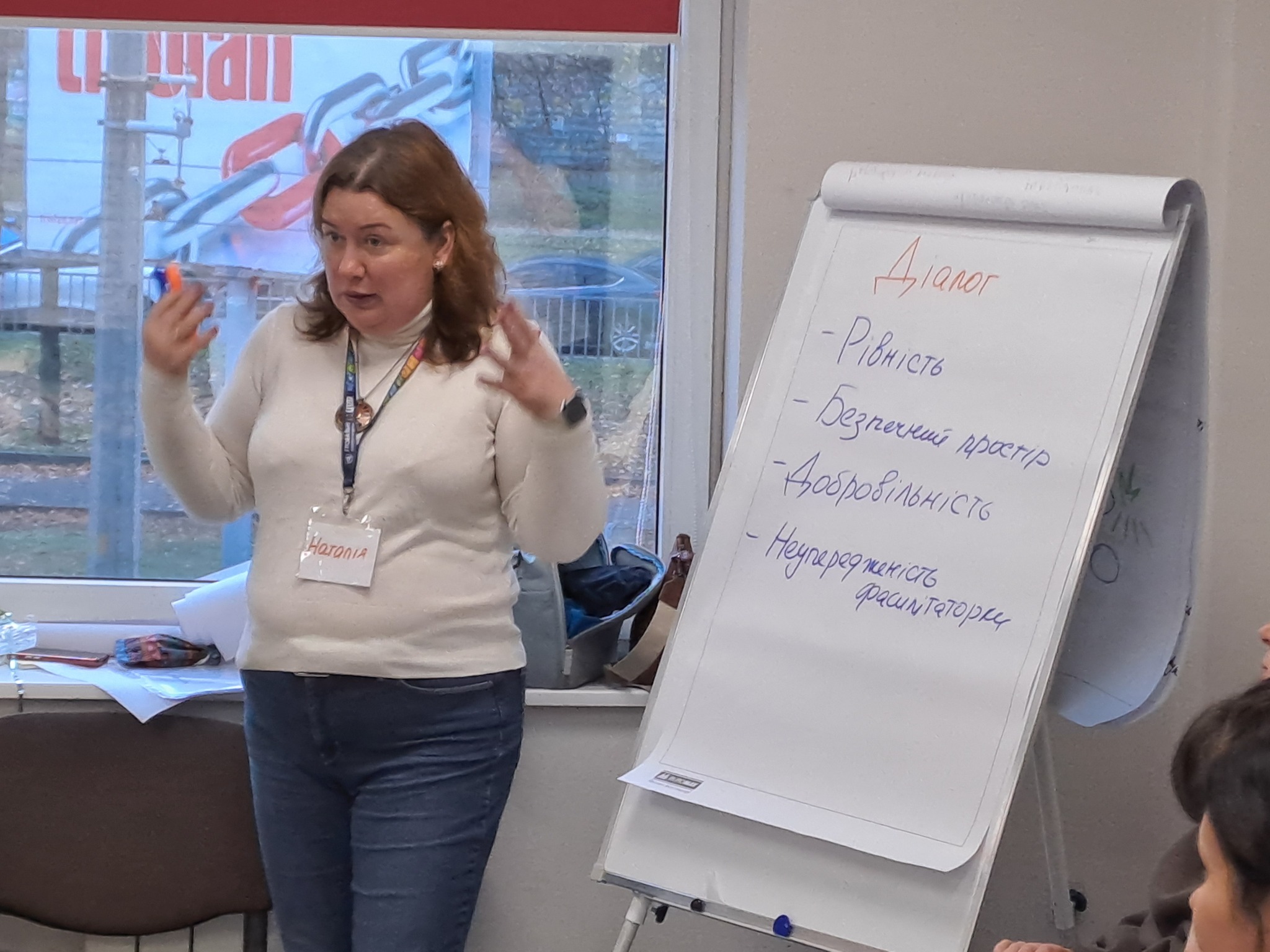
These and other important issues were discussed at the training session “Dialogues in Communities: Facilitating Social Cohesion.”
When there are different views on important topics in a community — security, the role of women in decision-making, the needs of IDPs, youth opportunities — dialogue becomes a tool that allows each side to be heard. This helps people see each other not as opponents, but as participants in a shared process. At a time when society is often polarized, this approach is critically needed.
During practical exercises, the training participants demonstrated that dialogue builds trust, and trust is one of the key conditions for community development. Together, they concluded that when people feel that they are being listened to, they become willing to participate in joint decisions and support local initiatives. This creates a culture of cooperation where everyone has a voice and influence over change.
“Training dialogue facilitators is extremely important right now, because communities need people who know how to talk about “difficult” issues and help participants listen to each other,“ said Natalia Stadnychuk, director of the NGO ”Space for Positive Change.“ ”Facilitators are those who support the process, structure, and safety, but do not impose their views. In times of war and rapid change, they help communities maintain connections, avoid divisions, and move forward without losing the value of mutual support.”
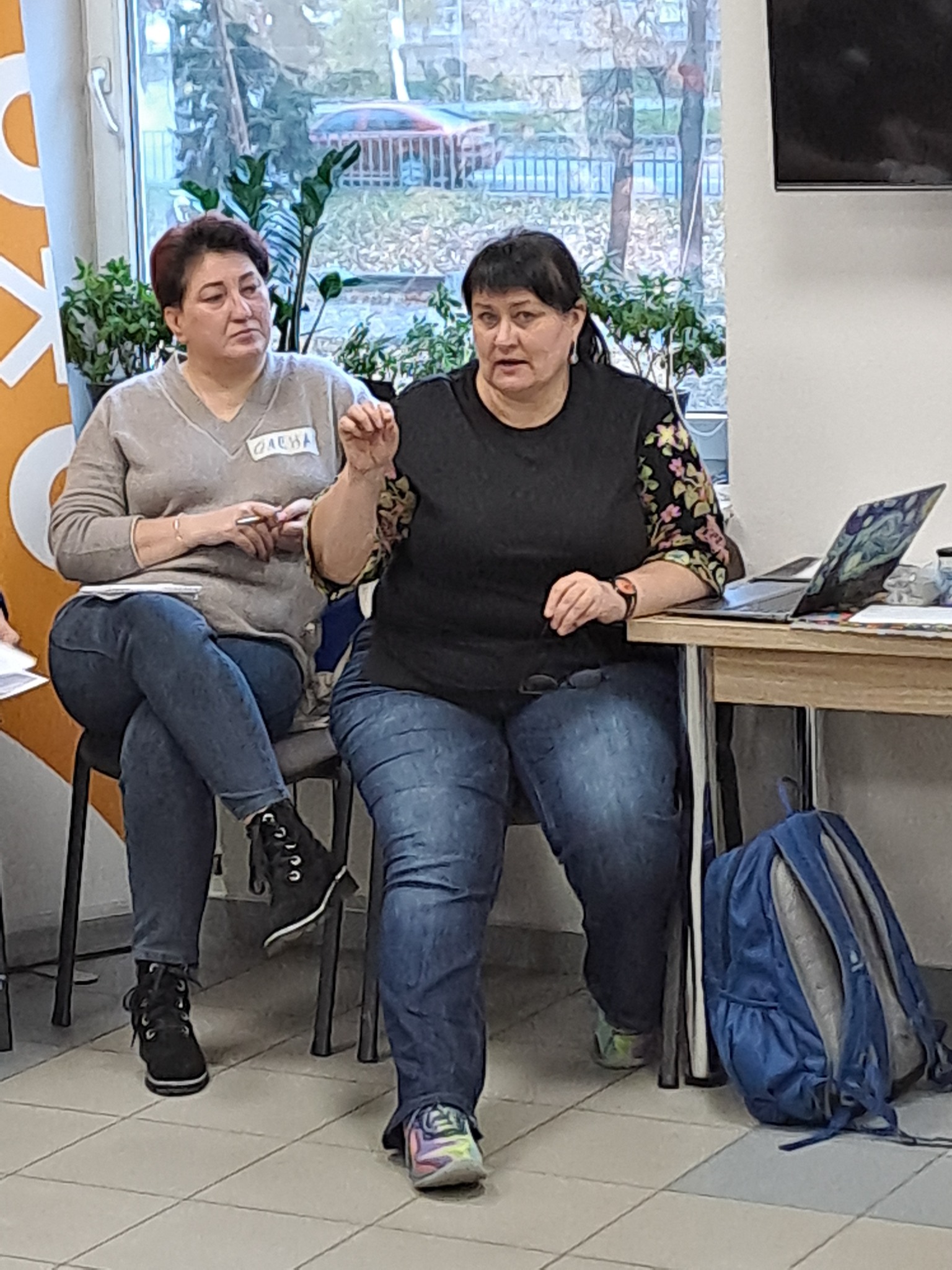
“Ultimately, dialogue is not just a method, but a culture of coexistence. It teaches us to see the person behind the position, the meaning behind the emotions, and the common ground behind the differences. And the more people there are in communities who are capable of leading and supporting such processes, the stronger, more resilient, and more united that community is — today and in the future,” added trainer and psychologist Olena Tsiysulnikova.
The training program is being implemented as part of the project “Workshop for Positive Change: Talk, Act, Influence,” which is being carried out by the NGO “Space for Positive Change” with the support of the Government of Canada as part of the project “Women. Peace. Security: From Local to Global,” implemented by the Ukrainian Women’s Fund.